Sample and Hold Circuits: Working, Applications, and Advantages in Hindi
Sample and Hold Circuits: Working, Applications, and Advantages in Hindi
Sample and Hold Circuits: Working, Applications, and Advantages
Sample and Hold Circuit एक महत्वपूर्ण Analog Circuit है जिसका उपयोग विभिन्न इलेक्ट्रॉनिक सिस्टम्स में किया जाता है। यह किसी भी Analog Signal के एक निश्चित वोल्टेज को कैप्चर (Sample) करता है और उसे एक निर्धारित समय तक बनाए रखता है (Hold)। यह सर्किट मुख्य रूप से Analog-to-Digital Converters (ADC), Communication Systems और Control Systems में इस्तेमाल होता है।
1. Sample and Hold Circuit का Working Principle
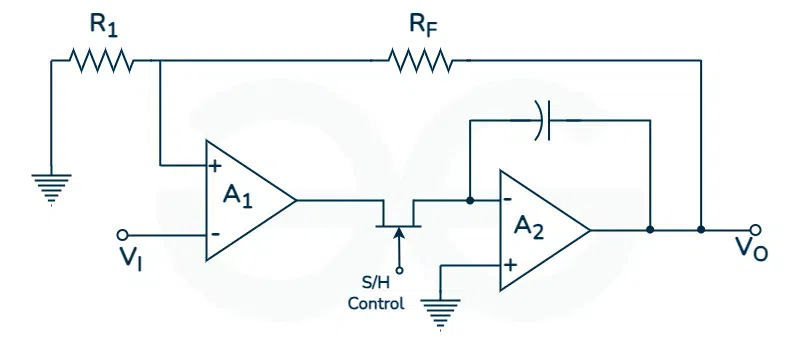
यह सर्किट मुख्य रूप से तीन प्रमुख भागों से मिलकर बना होता है:
- Sampling Switch: यह एक Electronic Switch होता है (जैसे MOSFET या JFET) जो Input Analog Signal को Sampling Capacitor से जोड़ता है।
- Hold Capacitor: यह एक Capacitor होता है जो Sampled Signal को Hold करता है जब तक कि अगला Sample नहीं लिया जाता।
- Operational Amplifier (Op-Amp): यह Capacitor द्वारा Hold किए गए वोल्टेज को Maintain करता है और Load Circuit को Stable Output प्रदान करता है।
2. Sample and Hold Circuit का Block Diagram
Sample and Hold Circuit को निम्नलिखित Block Diagram द्वारा समझा जा सकता है:
3. Sample and Hold Circuit की आवश्यकता
- Analog-to-Digital Conversion: ADC में Signal Sampling के लिए।
- Multiplexed Data Acquisition Systems: विभिन्न Sensors से Data Collect करने के लिए।
- Control Systems: Robotics और Automation में Stable Input Signals के लिए।
4. Sample and Hold Circuit की Applications
- ADC (Analog-to-Digital Converters): Analog Signals को Digital में परिवर्तित करने के लिए।
- Oscilloscopes: Waveform को Stable करने के लिए।
- Data Acquisition Systems: Scientific और Medical Instrumentation में उपयोग।
- Communication Systems: Signal Processing और Modulation Techniques में।
5. Sample and Hold Circuit के Advantages
- High Accuracy: यह Voltage Level को Distortion के बिना Hold करता है।
- Fast Response: उच्च गति के Applications के लिए उपयुक्त।
- Low Power Consumption: अधिकांश Applications में Power Efficient।
- Improved Signal Stability: Fluctuations को कम करता है और Output Signal को Stable बनाता है।
6. Future Trends in Sample and Hold Circuits
- Higher Speed and Precision: नवीनतम ADCs में बेहतर Sample and Hold Techniques।
- Integration in SoCs: Modern Microcontrollers और System-on-Chip (SoC) में इनका उपयोग बढ़ रहा है।
- AI and IoT Applications: Sensor-Integrated Systems और AI-Driven Devices में महत्वपूर्ण भूमिका।
Sample and Hold Circuits विभिन्न High-Precision Applications में महत्वपूर्ण भूमिका निभाते हैं। इनकी मदद से Analog Signals को Digital Systems में सही तरीके से Process किया जा सकता है।
Related Articles
Shannon’s Theorem for Channel Capacity: Concept, Formula, and Applications in Hindi
Shannon’s Theorem for Channel Capacity: Concept, Formula, and Applications Shannon’s Theorem डि...
Read More →Introduction to BPSK & BFSK Modulation Schemes in Hindi
Introduction to BPSK & BFSK Modulation Schemes Binary Phase Shift Keying (BPSK) और Binary Frequency...
Read More →Quantization Error: Concept, Causes, and Reduction Techniques in Hindi
Quantization Error: Concept, Causes, and Reduction Techniques Quantization Error डिजिटल स...
Read More →Pulse Code Modulation (PCM): Concept, Working, and Applications in Hindi
Pulse Code Modulation (PCM): Concept, Working, and Applications Pulse Code Modulation (PCM) एक डà...
Read More →Time Division Multiplexing: Concept, Working, and Applications in Hindi
Time Division Multiplexing (TDM): Concept, Working, and Applications Time Division Multiplexing (TDM) à...
Read More →